
Despite volume growth in the export segment and strong demand in the domestic market, pricing uptick is eluding Indian agrochemical companies.

The fiscal tilt towards capex benefits companies in investment-related sectors like capital goods, defence equipment, engineering & construction and metal & mining. The planned cut in revenue expenditure will weigh on companies in consumption sectors like FMCG, consumer durables and retail.

After a record-breaking year, India's automobile industry is entering 2026 on a relatively strong footing, with sales growth expected in the 6-8 per cent range. The outlook is underpinned by policy support, including GST rationalisation, easing monetary conditions, and income tax relief, which together are likely to improve affordability and sustain consumer demand across vehicle segments.

Packaged food major Nestle India posted better than expected September quarter results led by strong volume growth across its key segments. While there were margin pressures due to elevated raw material costs, there could be some relief with easing prices in the near term.

Brokerages lowered their earnings estimates following muted results in Q1FY24. While analysts remain optimistic about the stock's medium-term prospects, they highlight near-term concerns stemming from lower realisations due to changes in the product mix and margin pressures resulting from new plane additions.

UPI crossed 20 billion monthly transactions for the first time in August 2025, with a transaction value of Rs 24.85 trillion.

The stock of the country's largest listed oral care company -- Colgate-Palmolive (India) Ltd is up 18 per cent over the past month. The gains were led by better than expected June quarter (Q1) performance of the 2023-24 financial year (FY24) and growth revival expectations of the oral care category. The company's volume growth is pegged at 5-8 per cent in Q1FY24. This is the second consecutive quarter of volume growth.

Insurance intermediaries who receive disproportionately high commissions are likely to see a decline in their payouts, post the new Insurance Amendment Bill. The new Bill gives the Insurance Regulatory & Development Authority of India (Irdai) the power to disgorge unlawful gains made by insurers and intermediaries as well as the right to limit commissions paid to intermediaries.

Knowing this data will make it easier for traders to identify reversals and momentum swings. In this blog, we will explore how option chain analysis forecasts the market turns.

BCCI secretary Devajit Saikia believes a first Women's World Cup win for India would be a seminal moment, much like Kapil Dev's team in 1983.

'Growth will definitely continue to come most from the sub-four-metre SUV segment, primarily because that is where the heart of economy and affordability is. Naturally, that will keep pushing the share of that segment (in overall PV sales) higher.'

Top real estate developers are expected to report improved earnings and resilient presales growth, even as overall housing sales across major Indian cities declined during the July-September quarter (Q2) of 2025-26. The anticipated earnings growth in what is typically a subdued quarter is credited to steady sustenance sales, improved collections, the strong positioning of listed developers, and sustained demand for premium homes.

The company is eyeing sales of 8,000 units per month for the Kylaq, which starts at Rs 7.89 lakh (ex-showroom) and boasts 96 per cent localisation.

Given the stronger rural activity, and potential goods and services tax (GST) impact, investors are bullish on the two-wheeler (2W) segment. In August, dealers in the domestic market picked up 11 per cent more 2Ws year-on-year (Y-o-Y), despite only 2 per cent growth in retail registrations. This indicates inventory stocking ahead of the festival season. Export trends were good. TVS Motor and Royal Enfield may have gained domestic market share.

Bajaj Auto - the country's most valuable two-wheeler (2W) company by market capitalisation - met Street expectations in the January-March quarter (Q4) of 2024-25 (FY25) but still ended Friday as the worst performer on the Nifty 50, slipping 3.1 per cent.

The Election Commission is set to publish the draft electoral rolls for West Bengal on Tuesday following the completion of the statewide Special Intensive Revision (SIR) ahead of the 2026 assembly polls. The publication of the draft rolls will mark the end of the enumeration phase and the beginning of a far more contentious stage - claims, objections and hearings that will stretch into February 2026.

India's fast-moving consumer goods (FMCG) sector witnessed growth in rural consumption in volume terms outpace urban consumption for the first time in five quarters, in the January-March period. According to a report from consumer intelligence firm NIQ, rural consumption grew at a rate of 7.6 per cent year-on-year (Y-o-Y) in Q1CY24, overtaking that in urban areas which stood at 5.7 per cent.

GST Reform 2.0, which trims tax slabs from four to two, signals a push for demand-led growth, and together with recent income tax cuts, sets the stage for sustained economic growth, experts said. The Goods and Services Tax (GST) Council on September 3 approved an overhaul of the indirect tax regime by taxing essentials at 5 per cent and other goods at 18 per cent. A new 40 per cent tax will be applicable on luxury and sin items.

Election Commission data reveals Bhabanipur constituency in West Bengal recorded significantly higher voter deletions compared to Nandigram, sparking political debate ahead of the 2026 Assembly polls.

India's Diwali sales touched a record Rs 6.05 lakh crore -- comprising Rs 5.40 lakh crore in goods and Rs 65,000 crore in services -- buoyed by the recent GST reform and strong consumer sentiment, traders' lobby CAIT said on Tuesday. The Confederation of All India Traders (CAIT) based its findings on a nation-wide survey across 60 major distribution centres including state capitals and Tier 2 & 3 cities conducted by its research wing.

While Q2FY26 is expected to be mildly disappointing for the hospital sector, there's a lot of investor optimism for the future. This comes after a favourable revision in rates for Central Government Health Scheme (CGHS) procedures, as well as expectations of rising occupancy and growth in average revenue per operating bed (ARPOB).

Fast-moving consumer goods (FMCG) companies anticipate sustained volume pressures in the January-March quarter (Q4) coupled with sluggish rural growth during the period. Brokerages estimate top-line growth to be in low single digits in the quarter. Also, the late onset of winter had an impact on demand for winter products which range from moisturisers to hot beverages.

Ola Electric on Thursday said its automobile business turned profitable in the quarter ended September 2025 with pre-tax earnings growing by 0.3 per cent against a contraction of 5.3 per cent in the preceding three months.

Two-wheeler sales volume is expected to grow 5-6 per cent this fiscal, while that of passenger vehicles to see a 2-3 per cent rise, following the GST rates rationalisation on automobiles, according to Crisil Ratings. The GST Council's decision to move to a two-rate structure of 5 per cent and 18 per cent, effective September 22, 2025, is a timely move that will revive demand for automobiles, Crisil Ratings said in a statement.

Affordable homes, priced under Rs 40 lakh per unit, may not be attractive anymore, not just for developers but also for investors, with the segment seeing a 26 per cent price rise over three years since 2022 versus 40 per cent returns from luxury homes priced Rs 1.5 crore and above.

As deposit growth lags credit expansion, Indian banks face shrinking low-cost Casa inflows, rising funding costs, and structural shifts driven by UPI, e-Kuber, and digital savings trends, points out Tamal Bandyopadhyay.

In addition to new launches and restructuring across product segments, festival demand also aided growth.

Years of repression and disappearances have taught Venezuelans, the hard way, not to voice either their anger or their joy, observes Radha Roy Biswas who spent her formative years in Venezuela.

A ban on US-based high-frequency trader (HFT) Jane Street did little to dent activity in the derivatives segment, with July volumes rising 10 per cent month-on-month to an eight-month high. Analysts and experts said the jump may have come from proprietary and retail traders, spurred by a spike in market volatility.

Passive funds appeal to investors seeking to avoid the risk of underperformance by the fund manager and minimise the need for frequent chopping and changing of funds.
Pune-based two-wheeler major Bajaj Auto posted its highest ever quarterly revenue and profit after tax (PAT) in Q2FY26. Even as consolidated revenues were up 18.8 per cent year-on-year (Y-o-Y) to Rs 15,734.7 crore, PAT zoomed 53.2 per cent to Rs 2,122 crore.

There are some apparent paradoxes visible in the data from the first quarter of 2025-26 (Q1FY26). The gross domestic product (GDP) delivered a positive surprise with 7.8 per cent year-on-year (Y-o-Y) growth.

India's decision to import LPG from the US helps it to diversify sources as it reduces almost full reliance on West Asian countries for supply of the country's primary cooking fuel.

Real estate firm Godrej Properties' profit (attributable to the equity holders of the parent) for the second quarter of FY26 grew 21 per cent year-on-year (YoY) to Rs 405.1 crore, beating analysts' estimates. The Bloomberg analysts' poll had pegged the profit at around Rs 349.4 crore.

Nearly 7 out of every 10 P2M UPI transactions take place in high frequency categories like groceries, restaurants, pharmacies, fuel service stations, bakeries and utility services such as electricity, gas, water and sanitation.
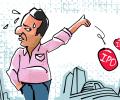
India's equity markets may have expanded rapidly, but initial public offerings (IPOs) are increasingly becoming exit vehicles for early investors rather than as engines for raising long-term capital, a shift that undermines the spirit of public markets, Chief Economic Advisor V Anantha Nageswaran warned on Monday at a CII event.

A deep split has emerged within India's auto industry over the proposed CAFE exemption for small cars, with only Maruti Suzuki and Renault backing the move in the final SIAM vote.

Adani Energy Solutions on Monday posted a 28 per cent decline in consolidated net profit to Rs 557.10 crore for the September quarter, mainly due to one-time adjustment of deferred tax of Rs 314 crore in the year-ago period. Adani Energy Solutions Ltd (AESL) had reported a net profit of Rs 773 crore in the July-September quarter of the last fiscal.

India's crude oil imports from Russia saw a marginal decline in September, but continued to account for over one-third of the country's total oil purchases, despite US pressure to curb the trade over concerns that it supports Moscow's war effort in Ukraine. India's crude imports in September were around 4.7 million barrels per day, up 220,000 bpd month-on-month and flat year-on-year.

Banks have been borrowing heavily from the Tri-Party Repo (TREPS) market and deploying those funds into the Standing Deposit Facility (SDF) of the Reserve Bank of India (RBI), which is offering higher interest rate than the former, leading to increased volumes in the SDF window. The weighted average TREPS rate was trading at 5.66 per cent on Monday, 9 basis points lower than the SDF rate which currently stands at 5.75 per cent.
